Good HR Decisions Don’t Require Perfect Information. They Require Confidence.
In this article, you’ll learn:
- Why waiting for perfect information before making people decisions is rarely the answer, and what to do instead
- How to tell the difference between genuinely incomplete data and the kind of uncertainty that is actually very normal in HR
- Five practical things to try when you need to move forward but are not quite sure you have the full picture
The Decision That Keeps Getting Delayed
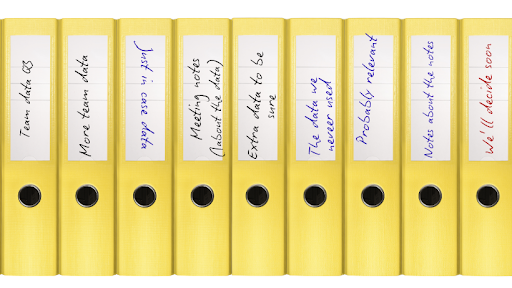
Most HR professionals can think of at least one decision that has been quietly sitting on the back burner for longer than it probably should: a promotion that feels overdue but is somehow hard to justify on paper, a performance conversation that keeps getting rescheduled because the evidence feels patchy, a restructure that everyone in the room knows needs to happen but that nobody quite feels ready to commit to yet.
The instinct to wait, to gather just a little more information before acting, is not a bad one and it genuinely comes from a good place: a desire to be fair, to be defensible, to make sure that whatever you decide will hold up if it is ever questioned.
The problem is that in practice the extra information rarely arrives in the neat, conclusive form we are quietly hoping for, and in the meantime the delay itself starts to have real consequences for the individual involved, for the team around them and for the organisation as a whole. Most significant people decisions get made with incomplete information, and the question is not really how to avoid that reality but how to navigate it thoughtfully and well.
Why People Decisions Are Never Fully Certain
Unlike financial decisions where the numbers largely are what they are, or operational decisions where the data tends to be relatively objective, people decisions involve human beings in all their complexity and that changes everything about how they feel to make.
Motivations are not always visible, context shifts in ways that are genuinely hard to capture in a spreadsheet, and two experienced managers looking at exactly the same situation will often reach meaningfully different conclusions while both being entirely reasonable in doing so. None of that is a flaw in the process, it is simply the nature of working with people, and the discomfort that HR professionals so often feel when facing a difficult call is not usually a sign that they are missing information they need.
More often it is a sign that they care deeply about getting it right, which is precisely the kind of instinct that leads to genuinely good decisions over time. What matters is developing a way of moving forward with real confidence even when certainty is not on offer, and getting clearer about the difference between a decision that genuinely needs more information and one that simply needs more courage.
The Difference Between Incomplete Data and Genuine Uncertainty
These two things can feel remarkably similar from the inside, but they are worth separating out because they call for quite different responses.
Incomplete data is a practical problem with a practical solution, meaning there is information that could reasonably be gathered and that would genuinely shift the picture if it were available, and in those situations a brief pause to collect what is missing is entirely justified, as long as that pause is measured in days rather than stretching into months while everyone quietly waits for a moment of clarity that may never quite come.
Genuine uncertainty is something else altogether, and it is what you are dealing with when the available information has already been considered carefully, the relevant people have been consulted, the patterns have been looked at from more than one angle, and the decision still feels hard. That is not a data gap. That is just what difficult people decisions feel like from the inside, and recognising it as such is actually a signal to move forward thoughtfully rather than to keep searching for something that will make the choice feel easier than it is. Learning to tell these two situations apart is one of the most useful things an experienced HR professional can develop a feel for, because it stops the pursuit of more information from quietly becoming a way of avoiding the decision itself.
Five Things to Try When You Need to Move Forward
1. Write down what you actually know, separately from what you are assuming. This sounds almost too simple to be worth doing, but most people have genuinely never separated these two things out explicitly, and when you do the effect can be striking, because quite often the solid ground turns out to be considerably more substantial than it felt when everything was mixed together in your head, and the assumptions become much easier to either test or consciously set aside.
2. Ask yourself what a reasonable, fair-minded observer would make of the situation. Not a perfect observer with access to information you do not have, but a reasonable one working with what is actually available to you right now. This is a useful way of stepping outside your own anxiety about the decision and grounding it in something more objective, and it doubles as a good test of defensibility: if a fair-minded person with the same information would likely reach the same conclusion, you are almost certainly on solid enough ground to act.
3. Look for patterns rather than proof. Individual data points are rarely enough on their own to support a confident people decision, but patterns that emerge across multiple sources often tell a clear and compelling enough story to act on, and that is what you are really looking for. If concerns about someone’s performance are showing up in their own self-assessment, in their manager’s observations, in the team’s output and in their engagement scores, that convergence is meaningful and significant even if no single element of it feels entirely definitive in isolation.
4. Consider what the real cost of not deciding actually is. Delayed people decisions are almost never neutral in their effect, and they send signals, whether intentional or not, to the individuals involved, to the teams around them and to the wider organisation about what is and is not acceptable, and those signals have a habit of sticking around long after the decision eventually gets made. Making the cost of continued inaction genuinely visible is a legitimate and often important part of the analysis, not a way of cutting corners on something that deserves proper care.
5. Document your reasoning, not just your conclusion. Much of what makes people decisions feel so exposing is the fear of not being able to explain them clearly if they are ever questioned, and the answer to that is not to keep waiting until everything feels completely watertight but to record carefully and honestly why you reached the conclusion you did with the information that was available at the time. A well-reasoned decision made with incomplete information is almost always more defensible than one that was delayed indefinitely with no reasoning documented at all.
What Good Actually Looks Like
A confident people decision is not the same thing as a certain one, and it is worth holding onto that distinction because it takes a significant amount of pressure off the whole process. What it actually means is a decision made thoughtfully and in good faith, with the best available information and in the genuine knowledge that waiting longer would not have meaningfully changed the outcome for the better.
The HR professionals who tend to handle this kind of thing well are not the ones who have somehow found a way to eliminate uncertainty, but rather the ones who have developed a consistent internal framework for working through it, separating what they know from what they are assuming, looking for patterns across multiple sources, being honest about the cost of delay, and keeping a clear enough record of their reasoning that the decision can be understood and stood behind if it ever needs to be.
That does not guarantee perfect outcomes, because nothing does, but it does produce decisions that are fair, considered and genuinely defensible, which is ultimately what good people decision-making is supposed to look like.
Building the Confidence to Act
A great deal of what makes people decisions feel harder than they need to is simply the absence of a clear framework for thinking them through, and when that framework is missing the whole thing can start to feel riskier and more exposing than it actually is. Having the right support around you, whether that means better insight into your people data, clearer patterns to work from, or a more structured approach to the decision-making process itself, does not remove the need for human judgement, but what it does is give that judgement something solid and reliable to stand on, so that when the hard calls come, as they always do, you are in the best possible position to make them well.
Ready to Make Better People Decisions With More Confidence?
At QPQ Perform, we work with HR teams and consultants who want to move beyond guesswork and gut feel and start making people decisions that are genuinely grounded in real insight. If any of this has resonated with something you are quietly navigating right now, we would love to have a conversation about what better might look like for your organisation.
[Get in touch with the QPQ Perform team →]
No hard sell. Just a conversation worth having.